Autonomous Labs, No Code Required

The advanced open-source OS for self-driving labs. Visually design and run reproducible workflows in Python.

Trusted by or Partnered with

UBC Logo
Telescope Innovations Logo
Acceleration Consortium Logo
NIMS Logo
Pfizer Logo
KPBMA Logo

IvoryOS Core

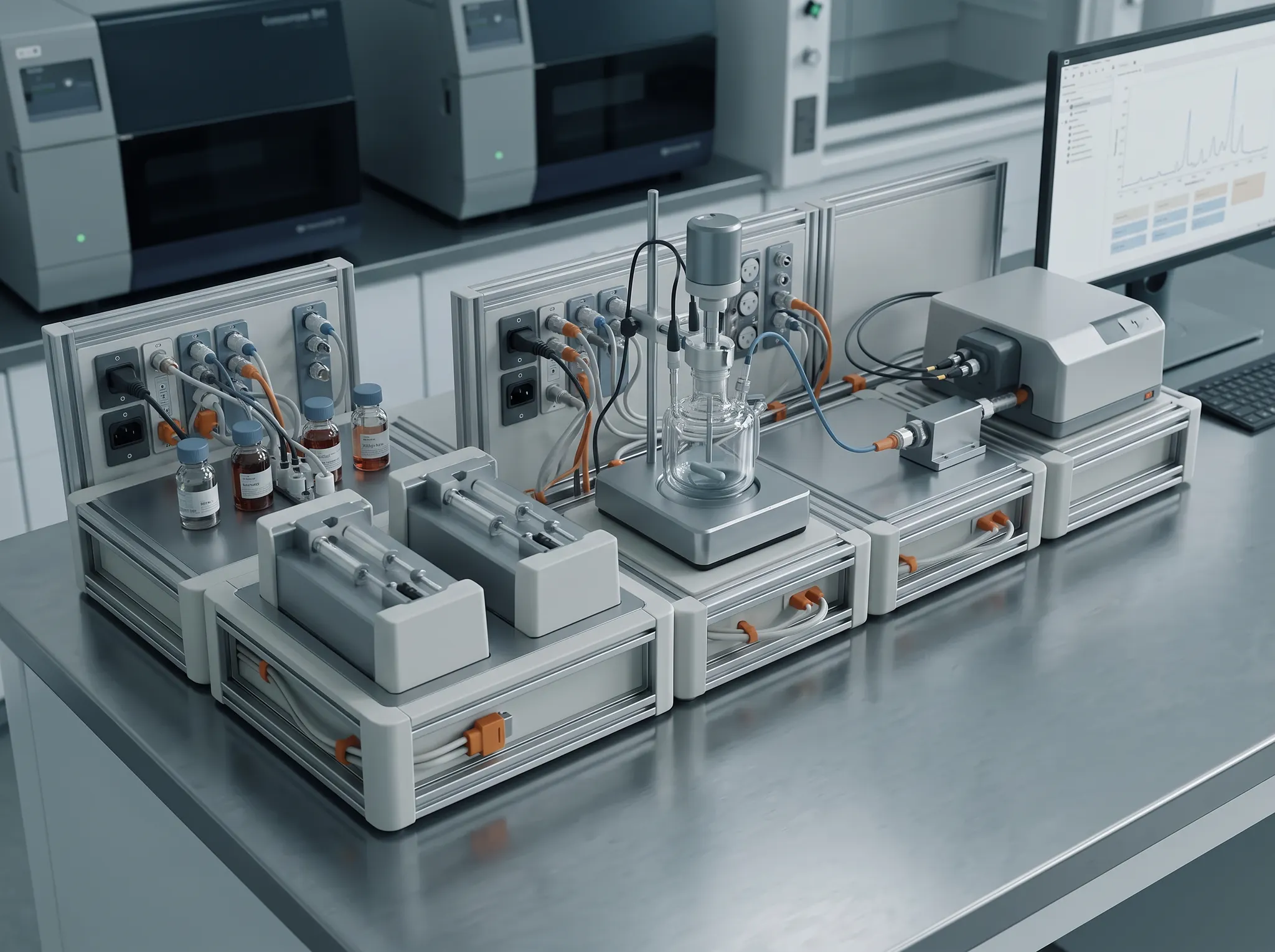
Develop in Python? IvoryOS turns it into an autonomous experiment platform in one line.

$pip install ivoryos
View on GitHubRead Paper
robot_controller.py
import ivoryos class MySelfDrivingLab: def add_liquid(self, amount: float, ...): """Add reagent""" ... def analyze(self): """Analyze data""" return 1 robot = MySelfDrivingLab()

Workflow Builder

Design experiments with visual drag-and-drop interface

Workflow Builder

Instant Web Interface

Research changes faster than software cycles. IvoryOS turns evolving Python code into an instant web interface — so scientists can test immediately while developers refactor freely.

Traditional
2 Weeks
IvoryOS
Instant

Science-Native

Designed for experiments — iteration, parameter exploration, and adaptive optimization.

Composible workflows

Pivot faster by rebuilding workflows from reusable building blocks — no rewrites required.

AI Intelligence

Interact with experiments in natural language — query data, guide decisions, stay in the loop.

Reproducible

Every action is logged. Standardized execution ensures results are repeatable.

Deploy platforms with a single click, and ensure complete reproducibility with shared workflow templates.

1Discover Platforms

Browse fully-configured platforms or mix-and-match community modules to fit your exact lab needs.

Discover Modules

2One-Click Deploy

Generate an all-in-one setup script that installs IvoryOS, drivers, and plugins instantly.

Pack Configuration

3Reproduce Workflows

Bundle shared templates with your platform to reproduce experiments across any lab.

Build and Run

Why IvoryOS?

The journey to autonomous discovery and how we're changing the future of lab automation.

Why automate scientific research?
1

Why automate scientific research?

Why automate scientific research?

Automation isn’t just about saving time or improving reproducibility. It enables autonomous discovery — systems that can run, learn, and decide what to try next. The goal isn’t faster experiments — it’s faster discovery.

Why is flexibility critical in R&D automation?
2

Why is flexibility critical in R&D automation?

Why is flexibility critical in R&D automation?

R&D is unpredictable. Workflows constantly change, and trial-and-error is essential. Scientists need to modify workflows quickly and add new instruments or steps easily. Rigid systems slow down discovery — flexibility isn’t optional, it’s essential.

Why is coordinating multiple instruments so hard?
3

Why is coordinating multiple instruments so hard?

Why is coordinating multiple instruments so hard?

Modern labs have many systems — robots, analytical tools, software — that don’t naturally communicate. Existing software is usually closed, hardware-specific, and rigid, so there’s no solution for dynamic, multi-instrument workflows.

Why is programming still the best solution today?
4

Why is programming still the best solution today?

Why is programming still the best solution today?

Programming remains the most flexible, powerful, and scalable way to automate scientific research. However, most scientists are not trained to code, and even if they were, it would be a waste of their time and talent.

Why not just hire more engineers?
5

Why not just hire more engineers?

Why not just hire more engineers?

The bottleneck is collaboration, not execution. Communication takes time, iterations slow down, and small changes become expensive. Scientists need independence in experimental design.

How does IvoryOS solve this?
6

How does IvoryOS solve this?

How does IvoryOS solve this?

IvoryOS combines an open, plug-and-play core (connect any instrument), flexible interface (visual + programmable), and an ecosystem layer (share and collaborate). It turns experiments into something programmable, composable, and scalable.

Why does an ecosystem matter?
7

Why does an ecosystem matter?

Why does an ecosystem matter?

The problem isn’t just tools — it’s fragmentation. An ecosystem allows sharing workflows, reusing integrations, and connecting people. Instead of retraining everyone, you connect and build on each other.

Who is IvoryOS for?
8

Who is IvoryOS for?

Who is IvoryOS for?

IvoryOS is for labs building automation from scratch, teams scaling complex workflows, researchers who want more control, and manufacturers with dynamic processes.

Can I use IvoryOS for beyond science, like on coffee-making robots?
9

Can I use IvoryOS for beyond science, like on coffee-making robots?

Can I use IvoryOS for beyond science, like on coffee-making robots?

Technically yes — but it’s overkill. IvoryOS shines when workflows are dynamic, iterative, and decision-driven. If your goal is to autonomously optimize the best ingredient and brewing method combination, that’s exactly what we can do.

Meet the Team

IvoryOS initiated in 2023 at the University of British Columbia (Hein Lab).

I

Ivory Zhang

Founder & CEO

J

Jason Hein

Scientific Advisor

F

Fergus Klein

Business Advisor

With support from

UBC Logo
Hein Lab Logo
Telescope Innovations Logo
Acceleration Consortium Logo
Creative Destruction Lab Logo
IvoryOS | Self-Driving Lab in One Line